How BeisbolPlay runs multi-feed baseball broadcasts with Castr
Multi-feed baseball distribution across Latin America for BeisbolPlay and 1 Baseball Network, from SRT contribution and sub-second monitoring through to cloud production and live clipping.
A baseball media ecosystem serving fans across Latin America
BeisbolPlay and 1 Baseball Network are two halves of the same baseball media operation, serving fans across Latin America and beyond.
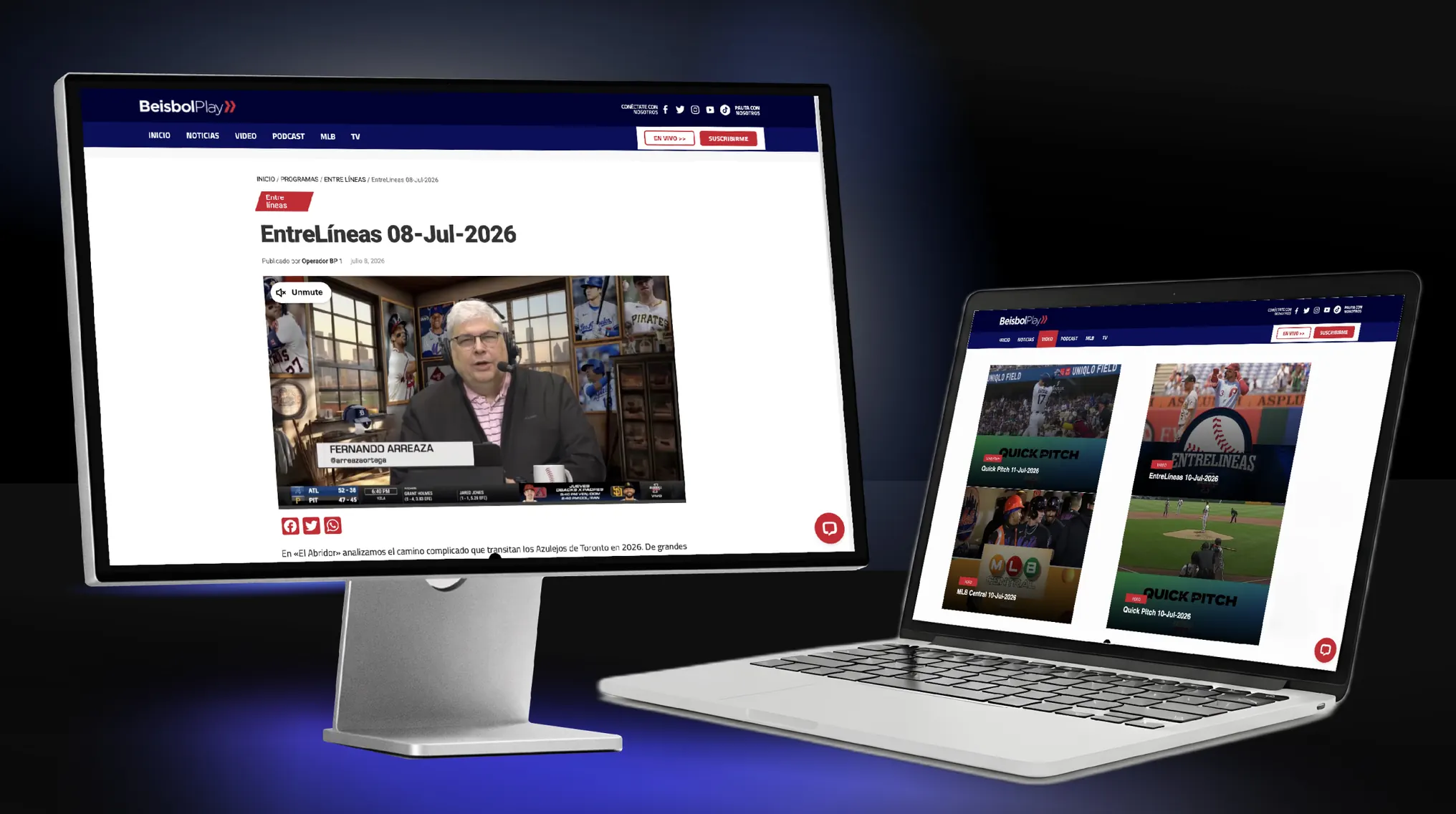
BeisbolPlay is the digital side: an online home for live games, MLB coverage, highlights, and subscription viewing. 1 Baseball Network is its linear counterpart, a dedicated channel covering Major League Baseball, Japanese baseball, and Caribbean baseball, carried by operators including Simple TV, Claro, Inter, and DirecTV.
Between them they run live games, linear channels, partner feeds, remote production, highlights, and reruns. Castr sits underneath all of it as the broadcast operations layer rather than as a livestreaming tool on its own.
Too many feeds moving at once to track by hand
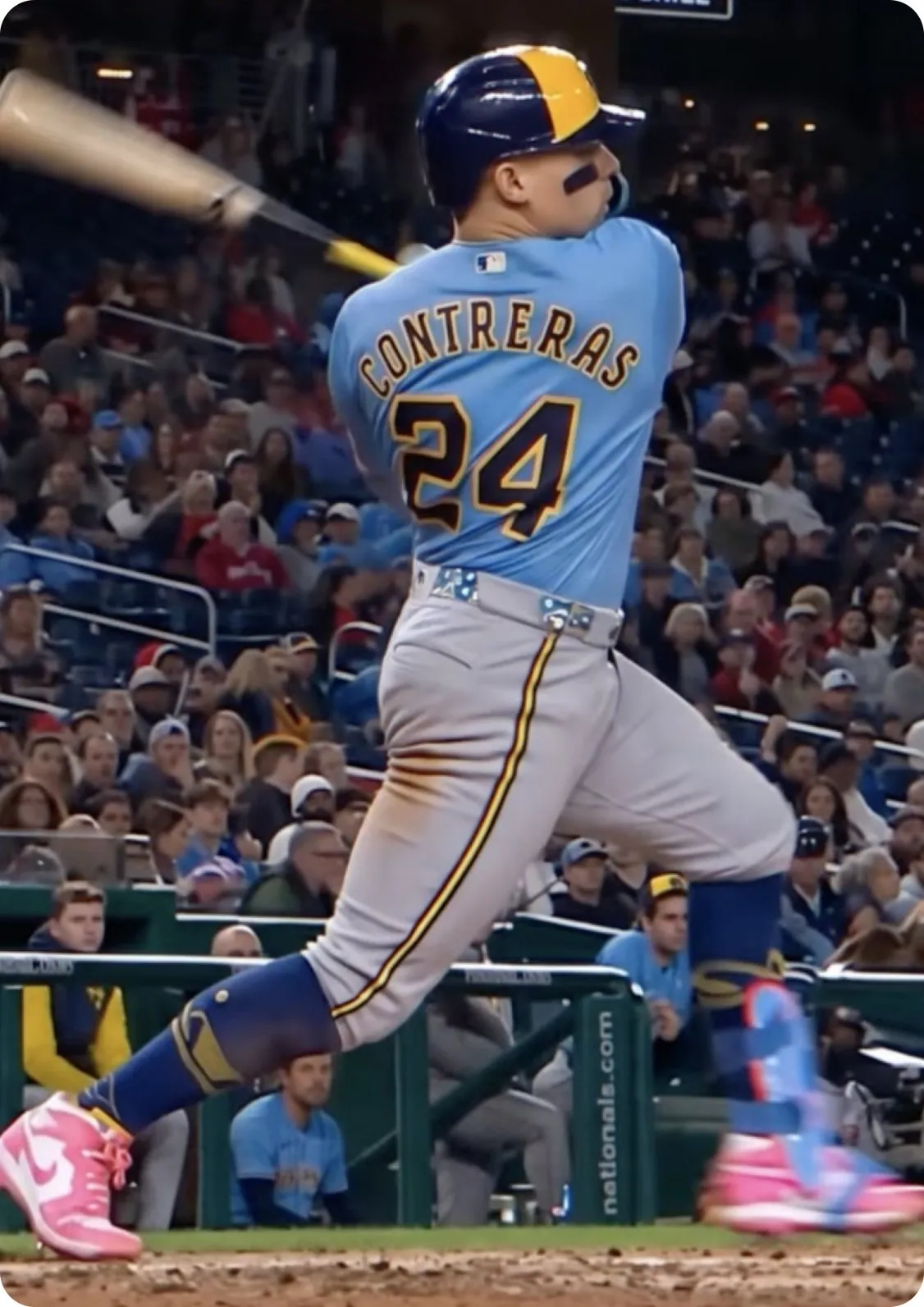
A single baseball game day can involve multiple venues, multiple feeds, different leagues, separate production teams, regional contribution points, distribution partners, backup workflows, and remote monitoring. Any one of those is manageable on its own. All of them, on the same afternoon, are not.
The pressure comes from repetition rather than from any single broadcast. Through the season the team runs several games a day, six days a week, which turns every manual step into something that has to hold up hundreds of times.
This was never a one-stream setup. That volume needs infrastructure that repeats cleanly, not a workflow reassembled by hand before every first pitch.
The priorities
- Multiple simultaneous baseball feeds
- SRT and RTMP contribution from venues and production teams
- Live routing between production locations and distribution partners
- Real-time monitoring for master control and remote crews
- Backup and disaster-recovery paths for every feed
- Cloud recording, clipping, and rerun workflows
Built for the complexity of live sports
Basic livestreaming would have covered a single game and stopped there. The operation needed multiple feeds and encoders, SRT and RTMP running side by side, distribution partners with their own requirements, backup paths, sub-second monitoring, clipping, cloud production, and someone reachable while a game is on air.
Castr holds all of that in one account. The payoff is operational rather than technical: one place to manage every feed, adapt to each partner, support remote crews, and keep baseball on air.
The whole broadcast operation in one place
BeisbolPlay came to Castr in 2023 and now runs its baseball operations end to end on the platform.
Feeds arrive from stadiums and production centers, get checked for health, route out to multiple destinations, and carry backup paths along the way. Sub-second streams give remote crews a low-latency reference, and cloud production handles branding without a round trip to on-premise hardware.
From that one setup the team runs many simultaneous channels and several distribution paths at once: master feeds, regional feeds, backup feeds, network feeds, partner feeds, and event-specific streams.
The operations layer behind those broadcasts provides:
SRT ingest and pull workflows
RTMP ingest and destinations
Multi-destination streaming
Backup ingest
Sub-second streaming
Cloud production
Live clipping and Live-to-VOD
Pre-recorded and rerun streams
Routing every feed from one place
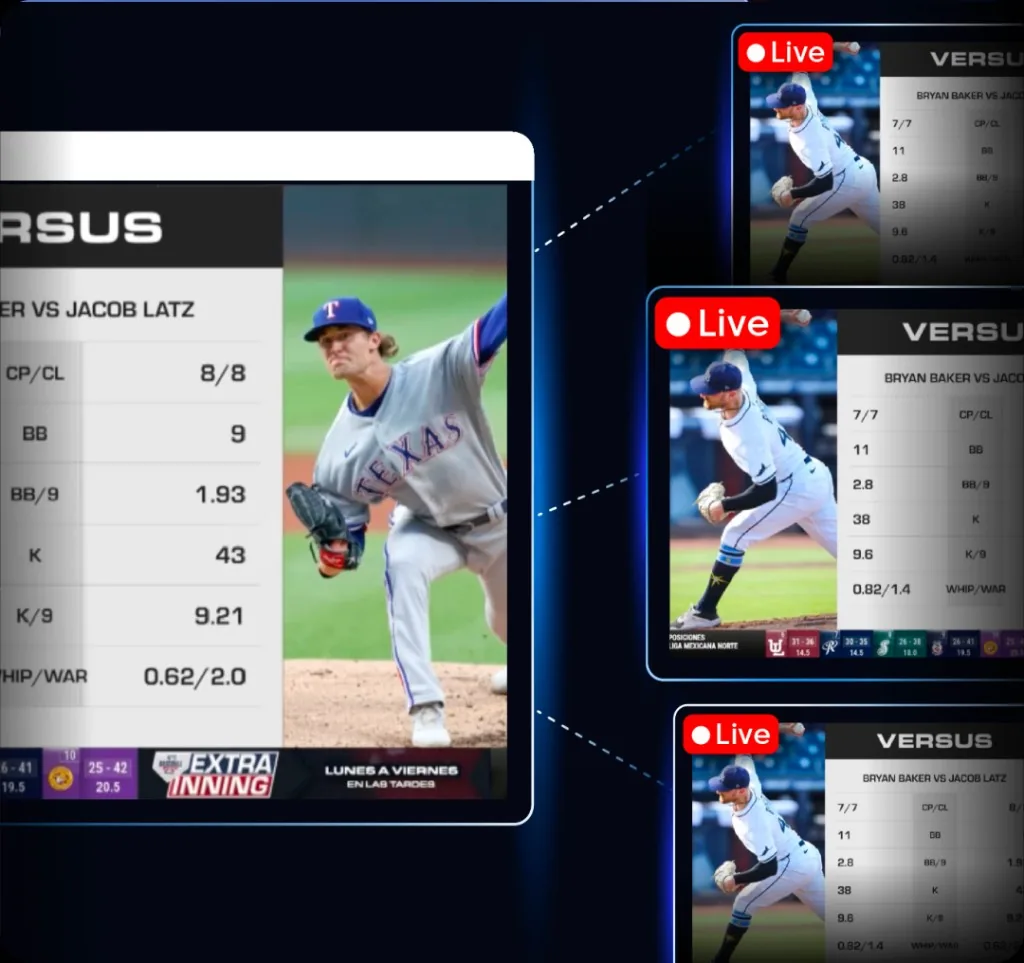
Live baseball needs more than one output. Feeds go out to platforms, broadcast partners, operators, and production systems. Some originate at stadiums or production centers, while others pass through to partners, get recorded, or get watched by remote crews.
Castr is the single routing layer for all of it: feeds in from production sources, out to multiple destinations over SRT or RTMP, with backup paths and input health on the same dashboard.
Baseball schedules are dense. Several games can run at once, and every feed still has to land in the right place.
Giving remote crews a real-time reference
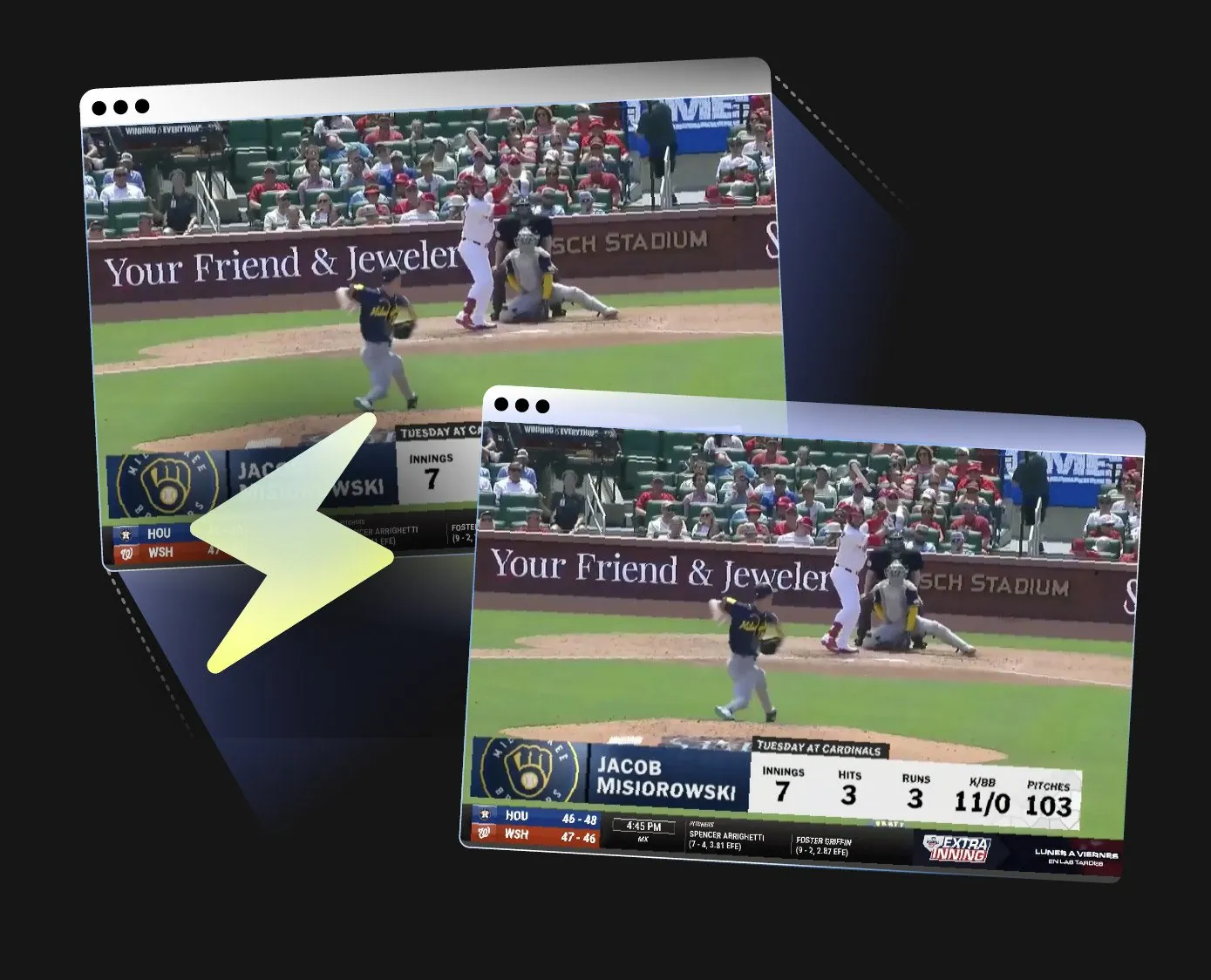
For live sports, remote production teams need to see the game as close to real time as possible. The team uses Castr’s sub-second streaming as the low-latency reference for play-by-play announcers, producers, master control operators, and commentary crews.
Instead of leaning on delayed HLS playback or standing up a separate monitoring system, Castr is the fast reference layer.
Moving channel branding into the cloud
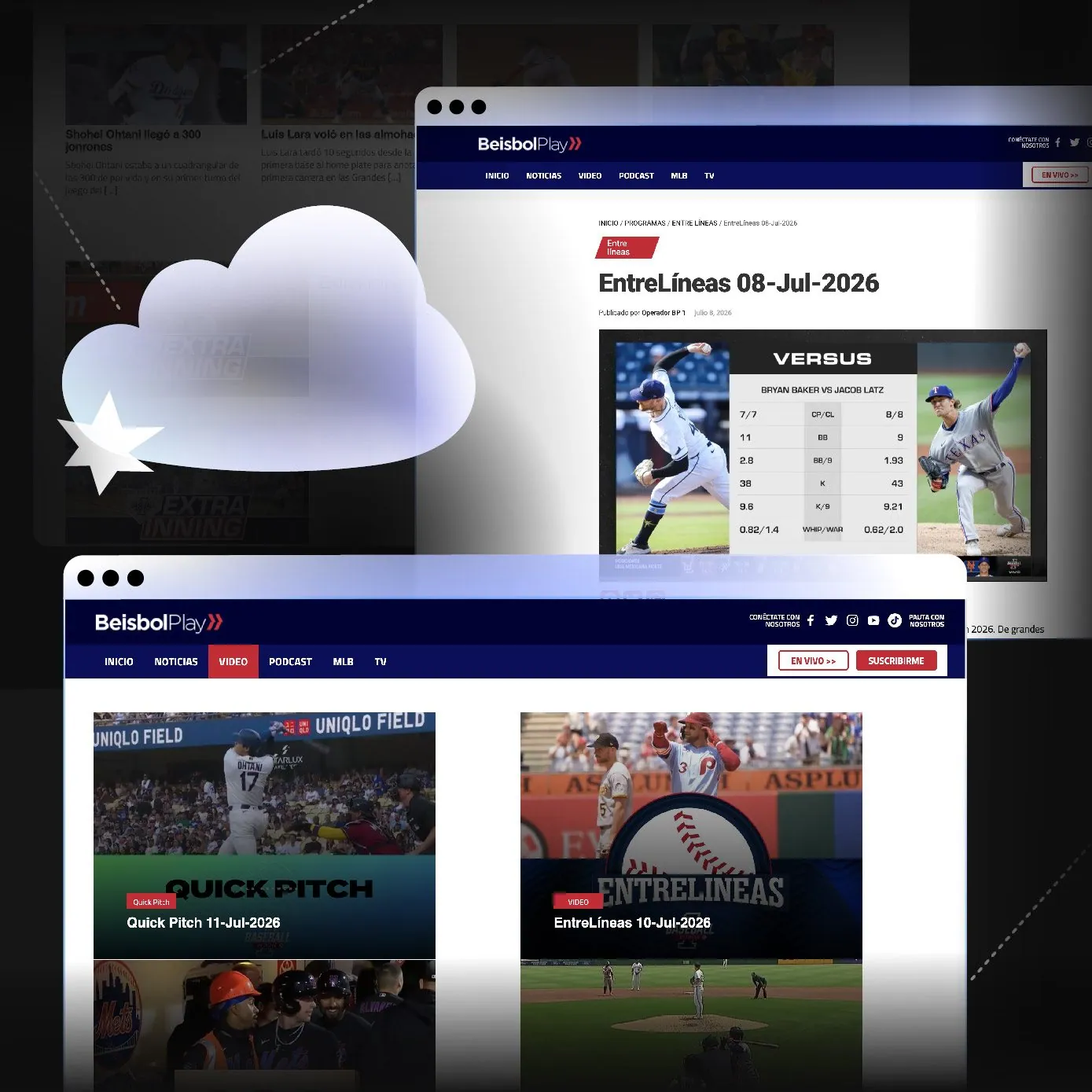
This is where the setup got measurably leaner. The team used to pull an SRT feed down into a local vMix server just to add a channel bug, then push it back upstream. They recognized that round trip as wasted effort and moved it into Castr’s Cloud Production.
It now handles branded overlays, switching between live feeds and loops, channel-specific versions of a feed, and seasonal branding. Production requirements change quickly during a season, and this is the part that absorbs it.
Closing the loop on highlights and replays
Baseball content does not end when the live feed comes off air. Highlights, clips, replays, reruns, and delayed programming all carry their own audience.
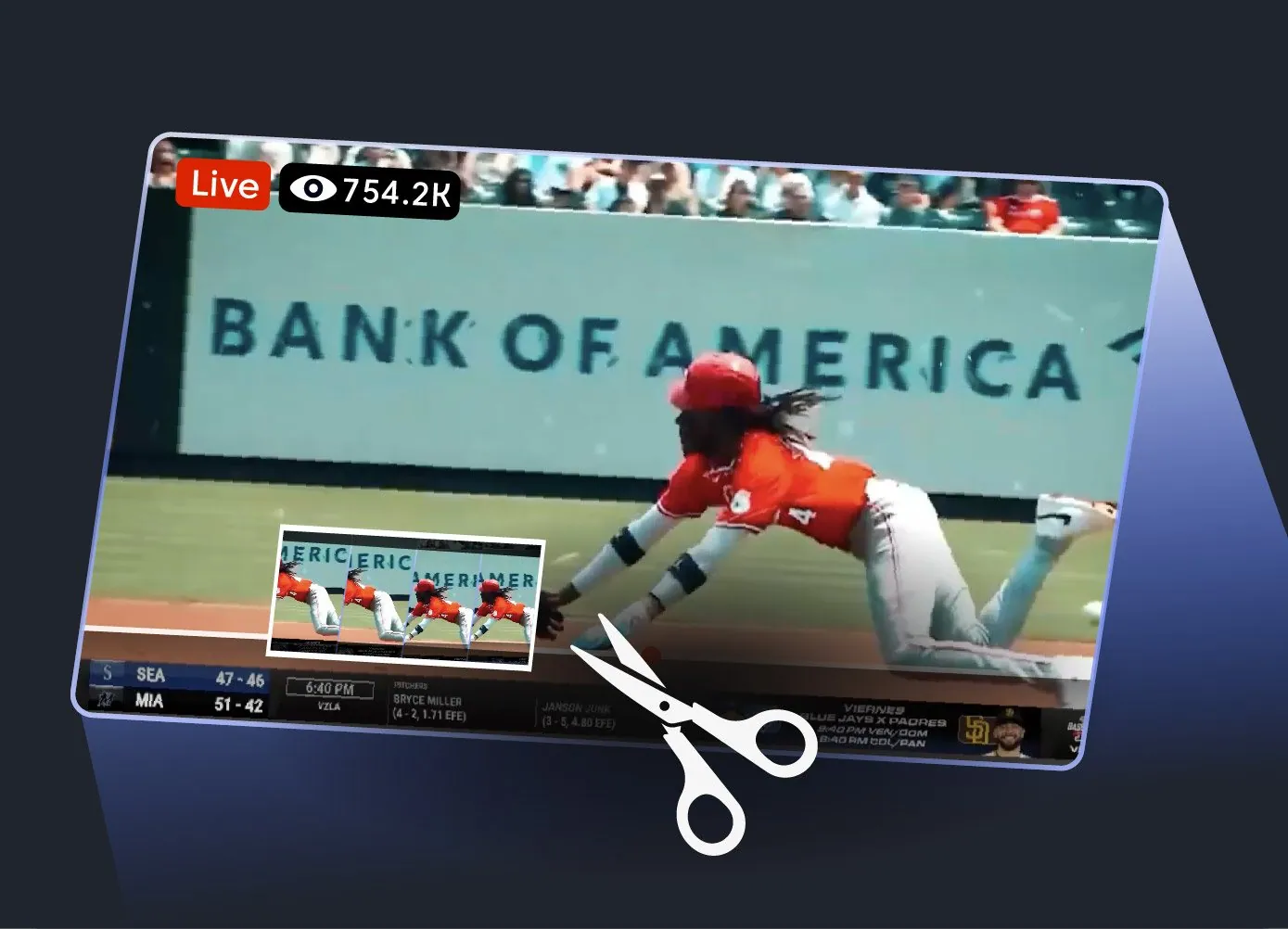
The team records feeds in the cloud, saves them with Live-to-VOD, clips key moments as they happen, and pulls recordings back into pre-recorded events for reruns. For baseball, the speed matters most in the minutes right after a big play.
Support that stays on through the game
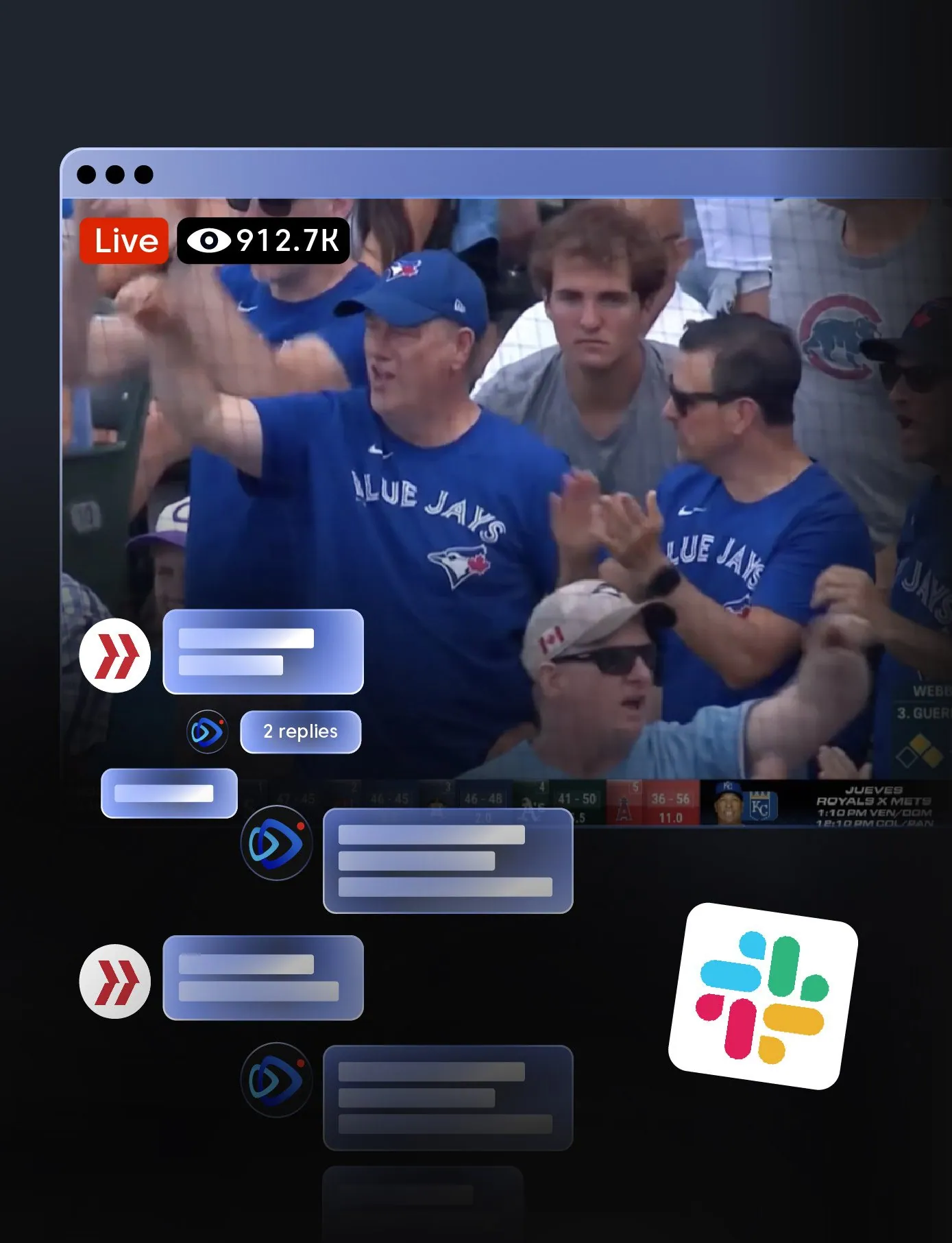
Live sports operations need help immediately or not at all. The team works with Castr through setup, testing, live windows, and post-event troubleshooting: encoder setup, SRT and RTMP handshake issues, destination capacity, cloud production testing, recording and clipping, DNS and routing, and backup workflows.
Castr tests workflows alongside the team rather than handing back a ticket number, and adjusts infrastructure while the broadcast is still running.
More feeds, leagues, and partners on the same setup
Since coming on board in 2023, the team has steadily widened what it runs on Castr: more livestream channels, more destinations, sub-second streams, cloud production, clipping, and pre-recorded workflows. That expansion is the result in itself. Today, from one platform, the team can:
Manage many simultaneous live feeds from one platform
Route feeds to multiple destinations over SRT and RTMP
Use sub-second streams for remote production monitoring
Record live feeds and turn them into VOD assets
Run cloud production for branding and channel workflows
Clip highlights while the game is still going
Add capacity quickly when the season demands it
What began as a streaming tool is now the operational backbone the team plans each season around.
The season always asks for more
As BeisbolPlay and 1 Baseball Network widen their coverage, the production and distribution side will keep changing with it: new feeds, new destinations, additional leagues, and more of the work moving into the cloud.
The setup already absorbs that kind of growth. Contribution, monitoring, distribution, production, clipping, and replay sit in one place, so adding the next league is a matter of configuring it rather than rethinking how it gets delivered.
More customer stories
How Shasha Delivers Live Football When an Entire Region Tunes In at Once
High-Traffic Live Sports Streaming, Regional Delivery, Content Protection
Read the story →
How The Pits TV Powers Its Motorsport OTT Platform with Castr
OTT Platform, Live Sports Streaming, Premium Video Delivery
Read the story →How ClipMyHorse.TV Made Equestrian Event Distribution More Repeatable
Live event routing, multistreaming, linear channels, commentary feeds
Read the story →Let’s talk through your live video setup
Bring us your channels, destinations, and delivery requirements. We’ll help you shape a workflow that stays organized as they change.
Evaluating a larger rollout? See how enterprise video streaming gets scoped.