How Shasha delivers live football when an entire region tunes in at once
Premium football for a Gulf audience that arrives all at once, delivered on 50 FPS workflows and regionally tuned CDN paths, with protection against restreaming elsewhere.
An entertainment platform turned football broadcaster
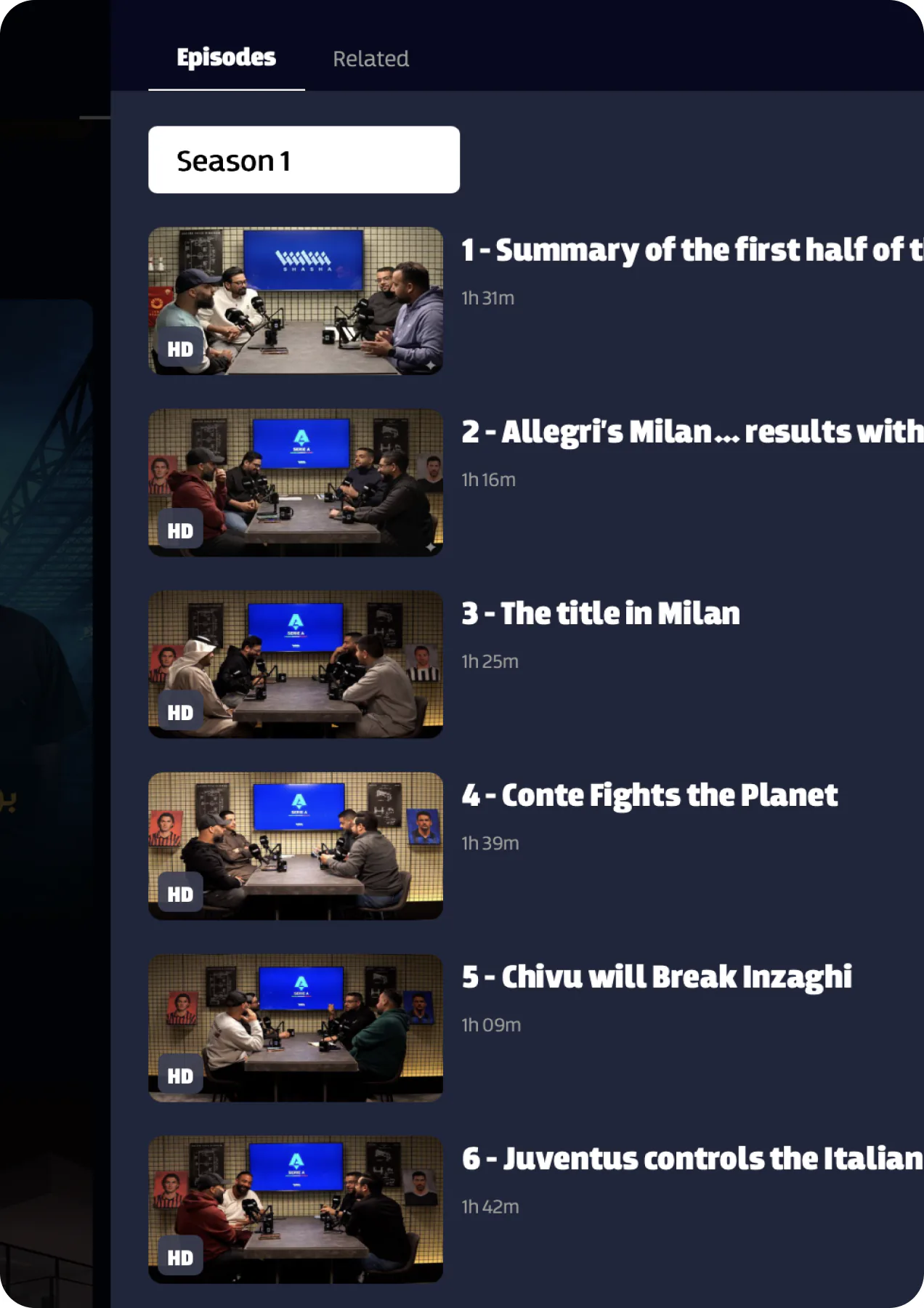
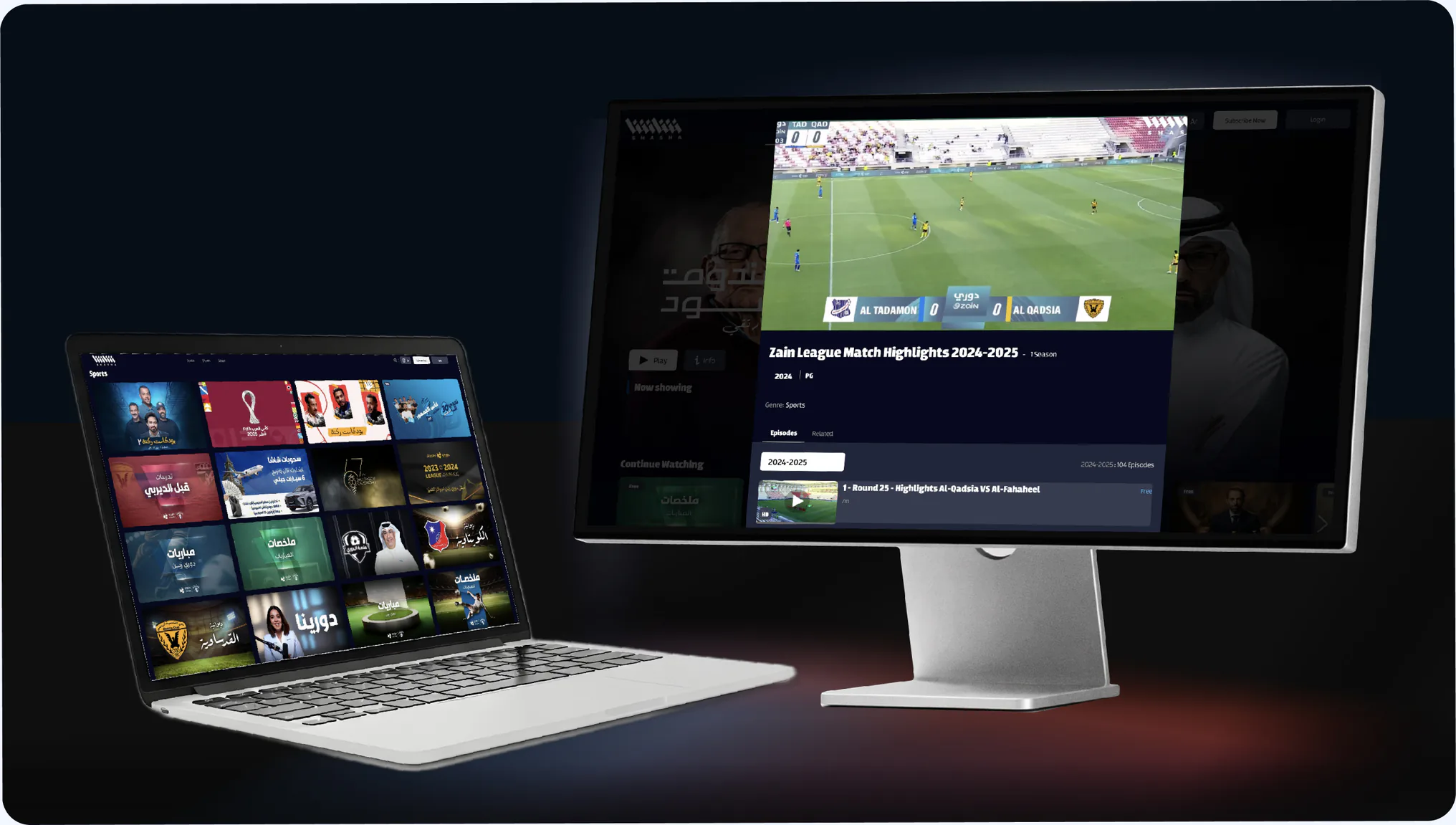
Shasha is a Gulf-based production and streaming platform built around regional stories, bringing Khaleeji dramas and comedies to viewers on web, mobile, and connected devices across the Middle East and beyond.
Then Shasha moved into live football. To a viewer, it is the same app. Underneath, it is the opposite problem. A drama gets watched across an evening. A match gets watched by an entire region inside ten minutes.
Football rights are expensive, and they only pay for themselves if the match reaches everyone who showed up.
A traffic spike the size of a whole region
Live sports produces the most demanding conditions in video delivery. Viewers do not trickle in over an evening the way they do for a drama series. They arrive together, minutes before kickoff, and a few seconds of buffering at that moment is the thing they remember about the whole match.
For Shasha the pattern was sharper still. The audience was heavily concentrated in the Gulf, especially around Kuwait and neighboring markets, so the load landed on a single region in a single moment rather than spreading across time zones.
Shasha had already tried several CDN and streaming setups against that shape of traffic. None of them held. The problem was never bandwidth. Those setups had bandwidth to spare. It was sitting in the wrong places.
The priorities
- Marquee football fixtures at broadcast quality
- Sudden audience spikes concentrated in one region
- Fast-moving play that does not judder or smear
- Watchable playback on slower home connections
- Consistent viewing across web, mobile, and TV apps
- Premium rights kept off unauthorized domains
- Expert help on call during a live match
Shasha needed an infrastructure partner
The problems on the table were the specific ones live sports creates: traffic concentrated in a single region, CDN performance under a spike, 50 FPS playback, SRT contribution, bitrate ladders tuned to real viewer connections, piracy, and technical help on hand while the match plays. None of those are answered by picking the right plan.
Castr took those as engineering problems and worked them against Shasha’s real traffic instead of starting from defaults.
From ingest to playback, tuned for one region
Shasha has run its live sports broadcasts on Castr since 2024.
The two teams built the setup together: multi-CDN delivery, custom ingest routing, adaptive bitrate profiles shaped to the real spread of viewer connections, SRT contribution, live monitoring through match windows, and protection around the HLS output.
None of it came out of a template. Every piece was chosen against the same question: how live sports traffic behaves in the Gulf when a match kicks off.
Castr covers the path from the encoder to the viewer:
Live streaming with large-scale HLS delivery
50 FPS workflows for smooth sports motion
Custom adaptive bitrate ladders
SRT and RTMP contribution
Regional ingest and multi-CDN delivery paths
Stream security and referrer protection
Live clipping for in-match highlights
Dedicated support through live events
Scaling for the rush at kickoff
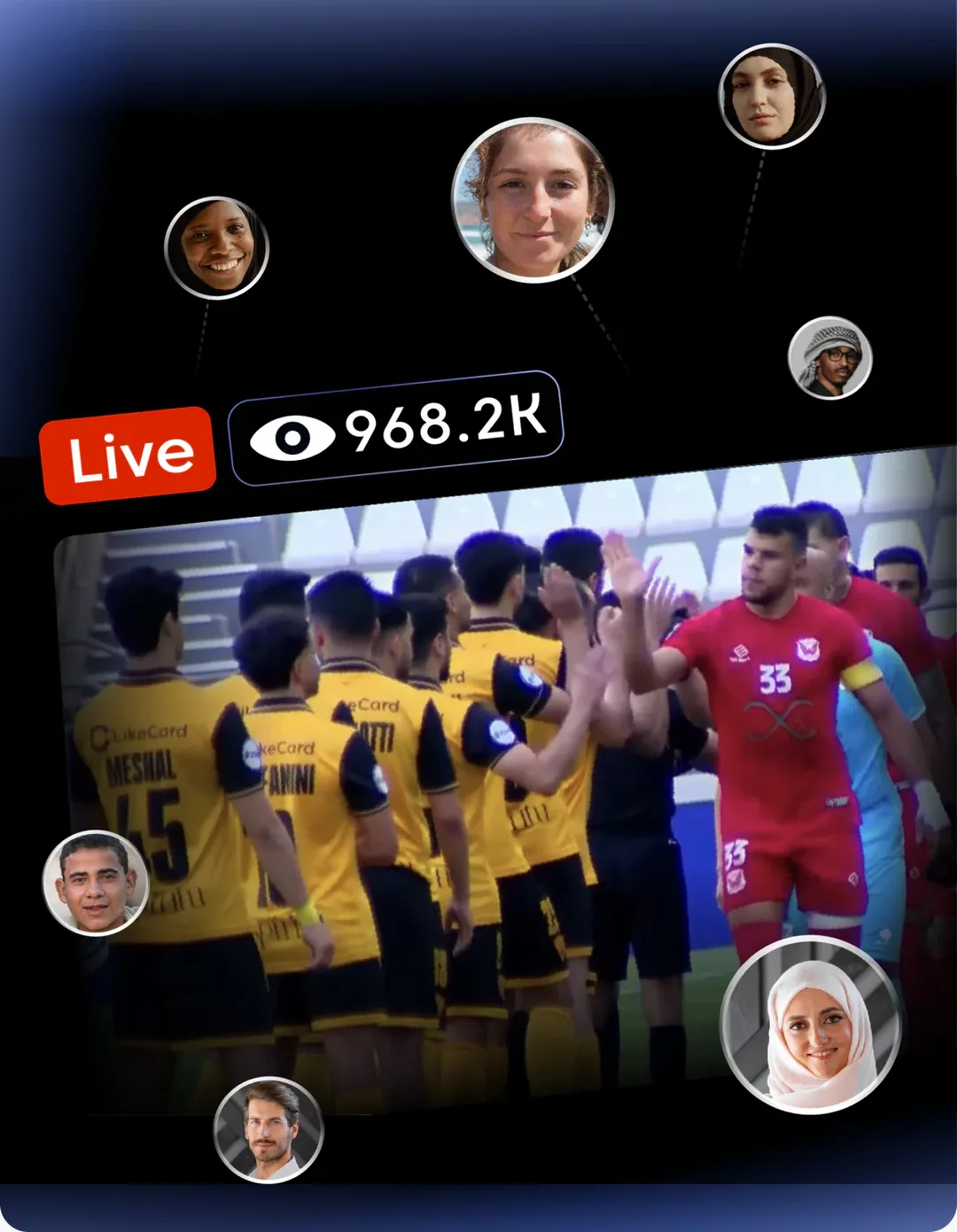
Thousands of viewers joining at once puts pressure on every part of the chain: CDN capacity, player startup, bitrate switching, and stream stability. Shasha needed to know the platform would hold before the whistle, not during the first half.
Castr prepared each high-traffic match day with the team, reviewing encoder settings, testing ingest paths, tuning bitrate ladders, and monitoring events live as they ran.
Getting everyone in is one thing. What they see is another. Shasha runs 1080p at 50 FPS so fast movement stays smooth, with lower renditions underneath for viewers on weaker connections.
Tuning the delivery path for the Gulf
Regionally concentrated traffic behaves differently from globally distributed traffic. When most viewers sit in the same few markets, local peering, caching behavior, and routing decide the experience far more than raw capacity does.
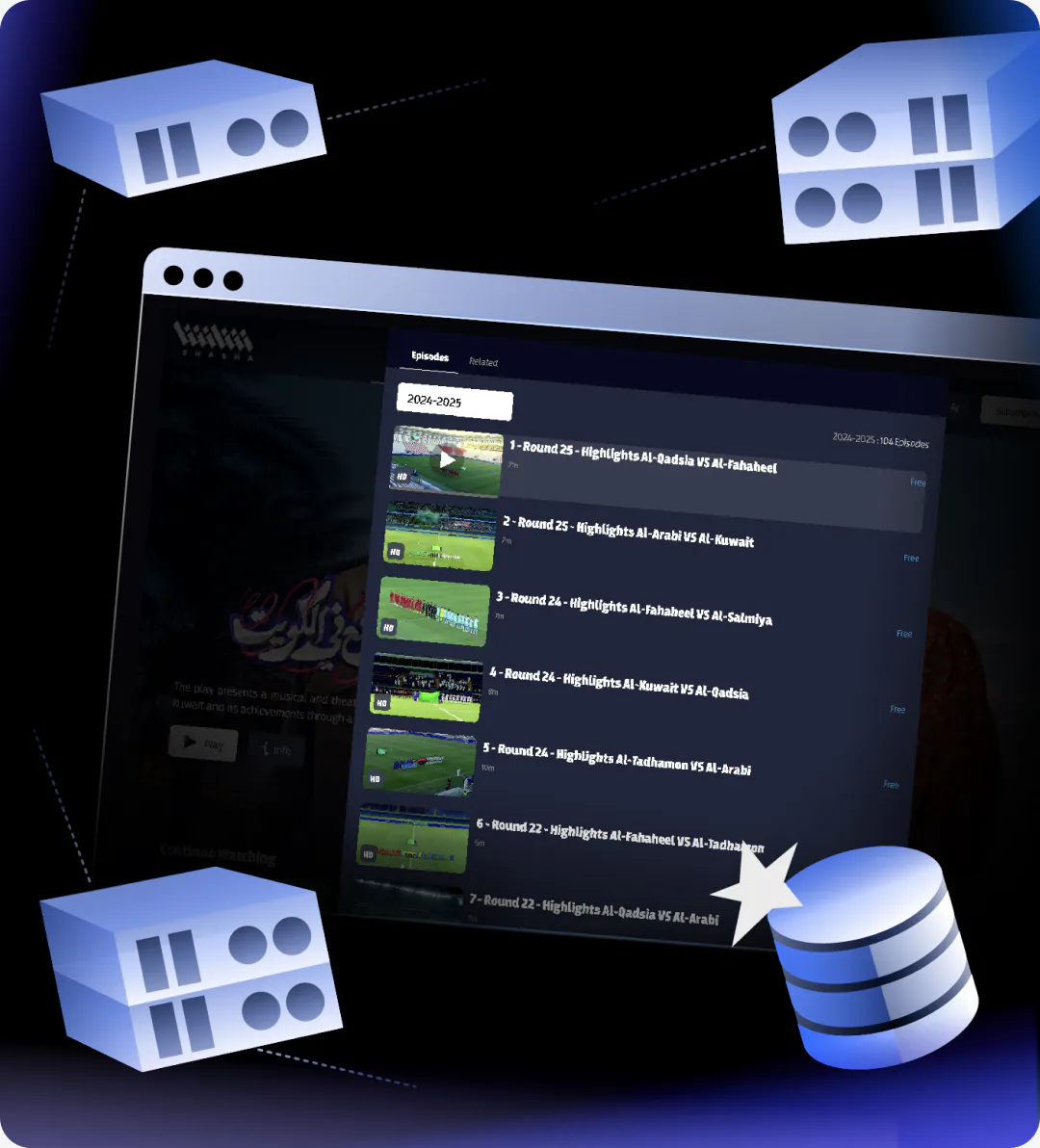
Castr tested and optimized delivery paths against that pattern, running a flexible multi-CDN strategy the team can shift as traffic and protection requirements change. Ingest routes through the region closest to the source, whether that is Istanbul, Dubai, Frankfurt, or New York.
That flexibility is what the earlier attempts lacked. Each arrived as a fixed setup to take or leave, and none of them could be tuned this closely to a single market.
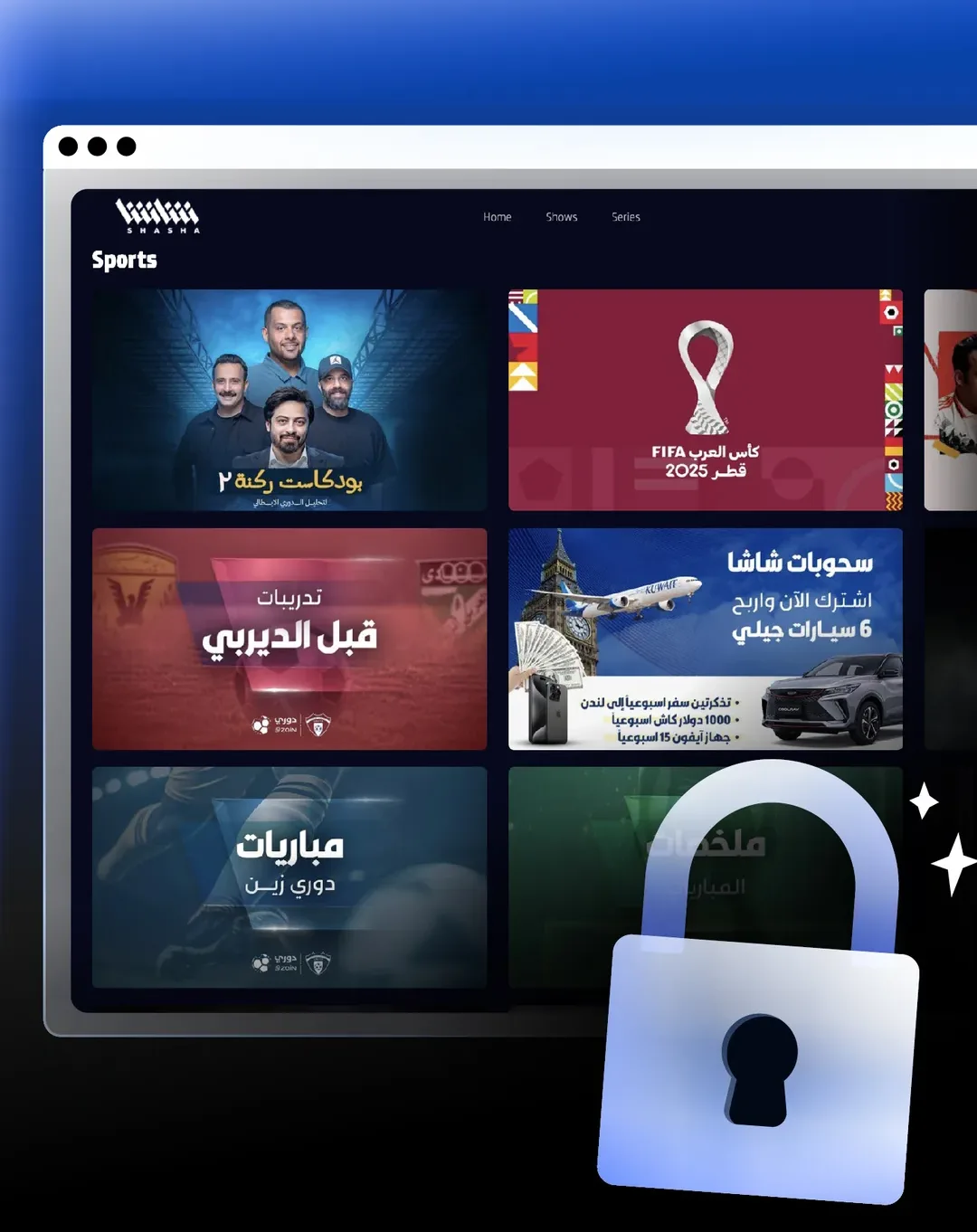
Keeping premium football on Shasha’s own screens
Premium football attracts unauthorized restreaming, shared links, and embedded playback on third-party domains. For Shasha that is both a business risk and a bandwidth bill.
Castr worked through the usage patterns with the team and tightened protection around HLS delivery: domain-based playback restrictions, referrer protection on the web, pattern-based blocking for unauthorized domains, and multi-CDN security controls.
Separating web and app delivery logic was the key move. App playback stayed stable while stricter domain rules went on web traffic, which cut unauthorized third-party playback without getting in the way of legitimate viewers.
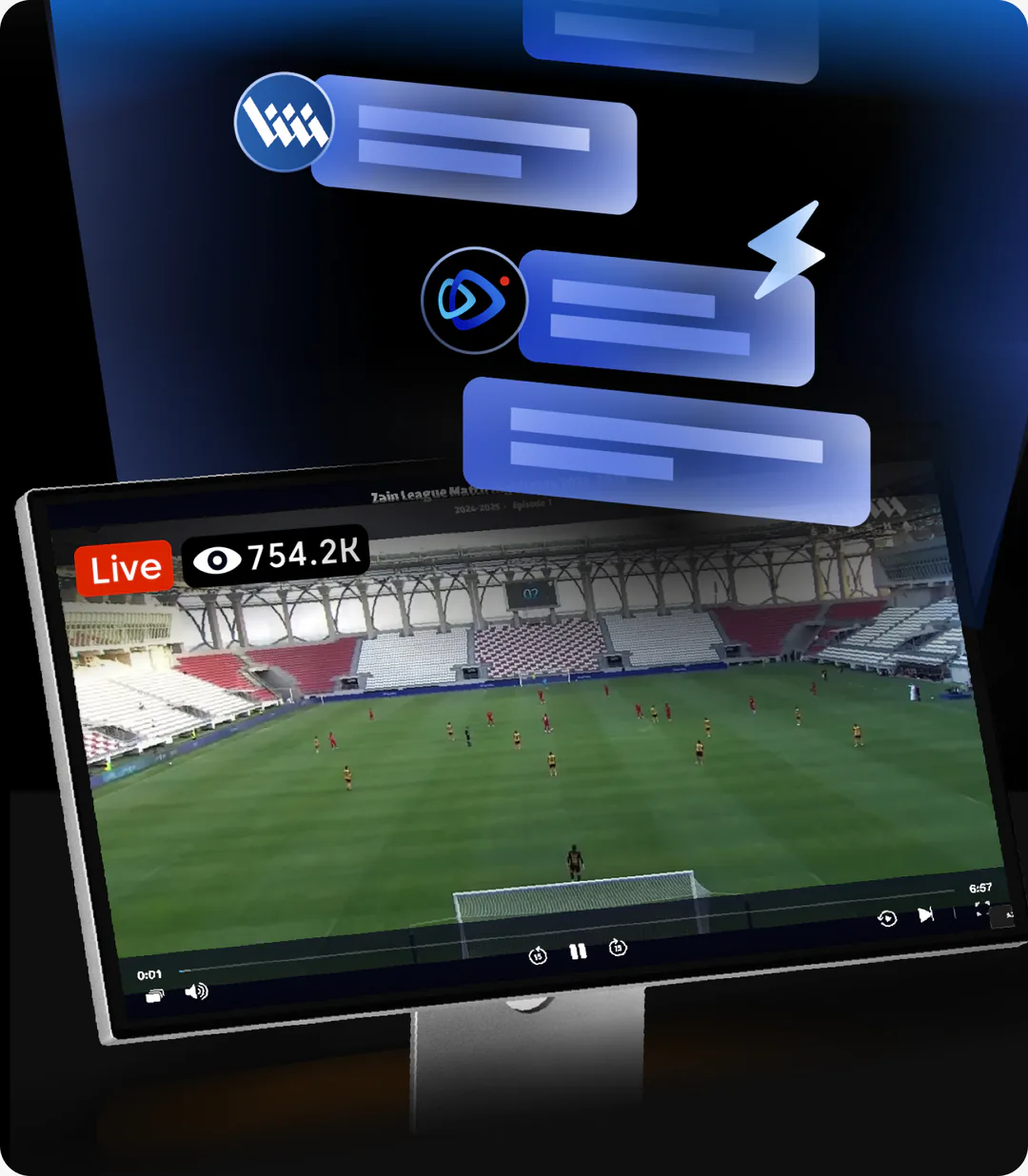
Working match days alongside Shasha
A live match leaves no room for a ticket queue. Minutes from air, a problem is either solved now or it is broadcast.
Castr worked alongside Shasha through setup, testing, and match-day operations: encoder configuration, SRT and RTMP workflow testing, regional ingest recommendations, CDN routing analysis, bitrate ladder tuning, and troubleshooting while events were running.
The arrangement has been hands-on from the start, with Castr working as an extension of Shasha’s own broadcast team.
Bigger matches on the same workflow
Live football now goes out on a setup that has held every week since. Across a match day, the team can:
Carry match-day peaks beyond 200 Gbps
Deliver live football to a Gulf-wide concurrent audience
Absorb the traffic spike that lands at kickoff
Move traffic between CDNs when a path underperforms
Hold 50 FPS through ninety minutes of live play
Step viewers down a rendition instead of losing them
Keep premium streams on Shasha’s own web and app surfaces
Watch traffic and adjust while the match is running
None of it depends on knowing in advance which match will be the big one. A quiet midweek game and a cup final go out the same way.
The fixtures keep getting bigger
As Shasha widens its coverage of live football and original programming, the demands grow in one direction: larger events, sharper traffic spikes, and more premium rights to protect.
The infrastructure is already shaped for that. Delivery, regional routing, protection, and live support sit in one workflow, so the next big match is only a question of scale.
More customer stories

How The Pits TV Powers Its Motorsport OTT Platform with Castr
OTT Platform, Live Sports Streaming, Premium Video Delivery
Read the story →How ClipMyHorse.TV Made Equestrian Event Distribution More Repeatable
Live event routing, multistreaming, linear channels, commentary feeds
Read the story →
How BeisbolPlay Runs Multi-Feed Baseball Broadcasts with Castr
Multi-Feed Broadcast Distribution, Sports Streaming Operations, Remote Production
Read the story →Let’s talk through your live video setup
Bring us your channels, destinations, and delivery requirements. We’ll help you shape a workflow that stays organized as they change.
Evaluating a larger rollout? See how enterprise video streaming gets scoped.